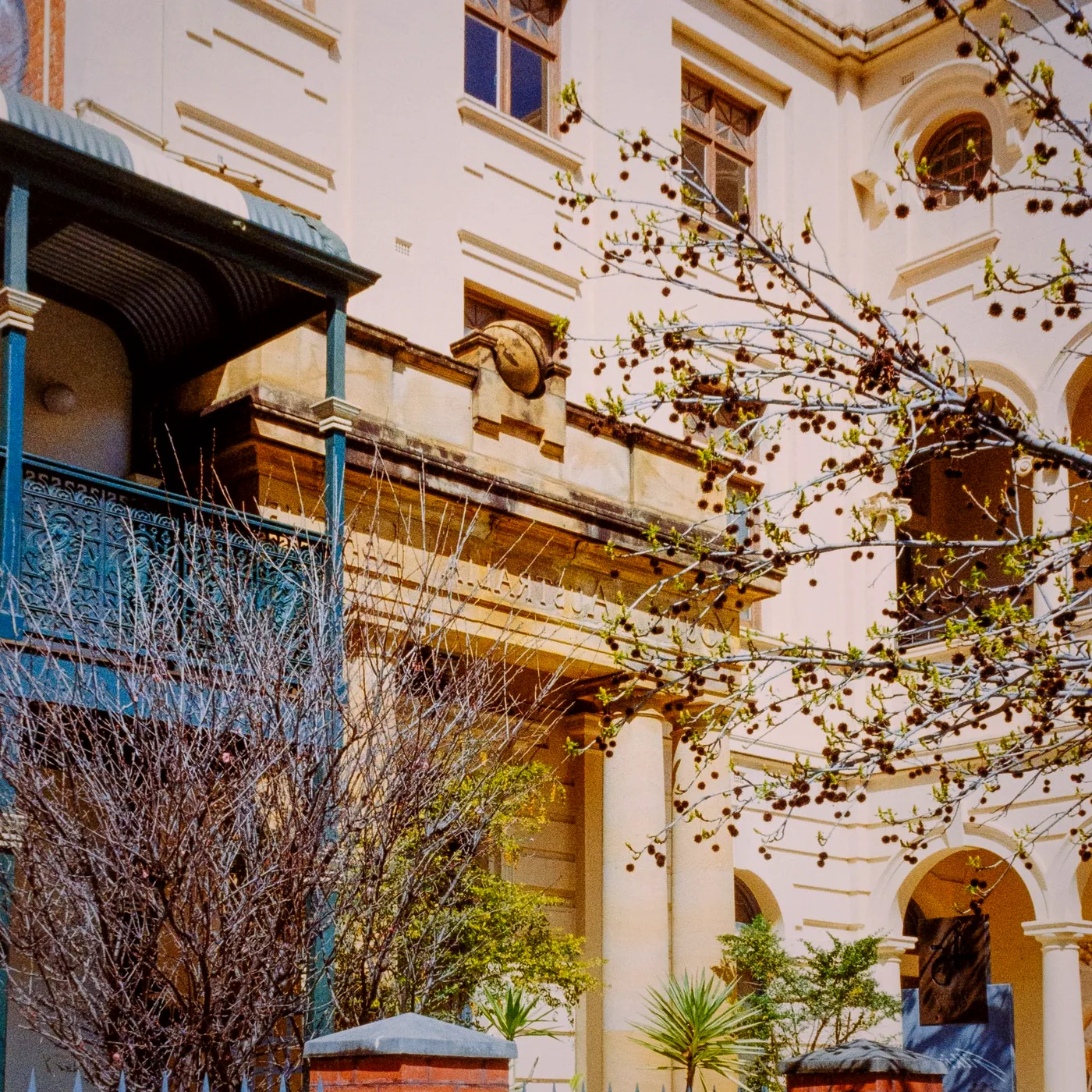
A grain agent's office
The building was put up for a grain agent, who needed an office near the water and a store behind it for sacks. The front is limestone, cut from a quarry a short drive from town, and the walls are nearly half a metre thick. They keep the dining room cool on a hot evening and warm on a cold one, which is more than can be said for most modern buildings.
The jarrah roof
The roof trusses are jarrah, brought across the Bight by ship at a time when timber of that quality was hard to find in the district. Each one was cut to length by hand, and a few still carry the pencil marks of the carpenters who fitted them. When the building was restored, the original roof was kept, cleaned and oiled, and nothing was hidden behind plaster.
The long years of waiting
For a long time after the grain trade moved, the building was used as a store, then as a workshop, then as nothing at all. Fergus Bradley bought it when the windows were boarded and the floor was covered in dust. It took three years to repair the roof, replace the floor, install a kitchen and persuade the council that a dining room was a good idea.
What was kept
The counter that once held ledgers is now the host's desk. The iron strongroom door stands open in the front hall, and the brass bell by the casino room door was a gift from a retired fishing boat. The old ceiling panels were cleaned and refitted, and the brass window latches were polished and kept in use.
What was added
The kitchen is new, as are the wiring, the plumbing and the ramp at the front step. The casino room was built in the former store, using timber salvaged from the old floor and panelled to keep sound inside. Even so, nothing has been done that could not be undone, and the building could be a grain office again tomorrow.